
Prime Minister Narendra Modi inaugurated the 'Nitish Setu', a six-lane bridge over the Ganga connecting Vaishali and Patna in Bihar. Built at a cost of Rs 4,280 crore, the bridge is expected to significantly reduce traffic congestion on the Mahatma Gandhi Setu, improve connectivity for residents of Raghopur Diara, and boost trade and economic development in the region.

The RSS-affiliated Bharatiya Kisan Sangh (BKS) is set to host its inaugural women's conclave in New Delhi, aiming to advocate for increased representation of women farmers in agricultural policymaking. The event will bring together 7,000 women farmers to discuss their significant contributions to farming, livestock, and fisheries, and to push for policy changes, including a shift from MSP to MRP for produce.

S Mahendra Dev, chairman of the Economic Advisory Council to the Prime Minister (EAC-PM), stated that India needs to increase the manufacturing sector's share in its GDP from the current 16-17 per cent to 25 per cent by 2047 to achieve developed economy status. This goal requires an average real GDP growth of around 8 per cent annually over the next 21 years, supported by a 34-35 per cent investment rate and diversified long-term financing.

Prime Minister Narendra Modi has challenged Indian industry leaders to increase job creation and employee salaries, arguing that government tax concessions and income tax relief should translate into greater employment and economic activity. He also urged businesses to improve product quality for the domestic market and leverage new trade agreements for global competitiveness.
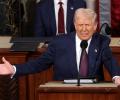
Experts suggest that a significant setback for US President Donald Trump in the midterm elections could compel him to pursue a swift trade agreement with India, as he seeks a quick foreign policy win amidst challenges with Russia, China, and Iran.

New Zealand's envoy to India, Patrick John Rata, stated that the recently concluded Free Trade Agreement (FTA) between India and New Zealand is more than a conventional trade agreement, reflecting mutual trust and designed to deliver balanced and tangible benefits to both economies.

Nepal Prime Minister Balendra Shah is on a two-day visit to India, focusing on energy, economic cooperation, and infrastructure development. This marks his first official bilateral foreign visit since taking office. Discussions will cover expanding connectivity, trade, and investment, with several MoUs expected to be exchanged. The visit aims to strengthen the deep-rooted ties between the two nations.

India's unemployment rate for individuals aged 15 years and above saw a marginal improvement, dipping to 5.1 per cent in the July-September 2026 quarter from 5.4 per cent in the previous quarter, according to the Periodic Labour Force Survey (PLFS). The decline was primarily driven by a fall in rural unemployment, while urban joblessness remained largely stable.

'If the temperature remains very high, which is likely to be the case because of El Nino, it may lead to a shortfall in wheat production.' 'If that happens, we will be in a very, very difficult situation as far as food security is concerned.'

'The priority of the government should be to use agricultural production for human beings first, and only after that for biofuel and such things.'

India does not need to win the model race to win the AI era. It needs to be the country that cannot be switched off, can be trusted by its citizens, and is useful to the rest of the world, asserts Rajeev Srinivasan.

'India needs to create eight-nine million jobs annually to absorb the growth in the working-age population.' 'Failure to create productive jobs could squander the demographic advantage that we enjoy right now.'

New Zealand Prime Minister Christopher Luxon stated that the historic Free Trade Agreement with India, now in effect, will help grow both economies, allowing Kiwi businesses to reach over a billion more customers with significantly reduced tariffs, leading to 'more jobs and higher wages for Kiwis'.

Navigating this geopolitical minefield requires a cold-blooded blend of immediate tactical pleading, structural domestic diversification, and aggressive collective resistance, suggests Ambassador Rajasekhar.

Chief Economic Advisor V Anantha Nageswaran stated that 2026 marks an inflection point for India, akin to 1991, necessitating the country to become globally indispensable in carefully chosen sectors to build strategic leverage for accessing geopolitically contested resources amidst a series of external shocks.
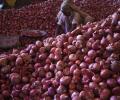
India's retail inflation surged to 5.54 per cent in September, primarily due to a significant increase in onion and other food prices, remaining just within the Reserve Bank of India's tolerance band. This marks the highest inflation since the new series with base year 2024 took effect in January.

Union Finance Minister Nirmala Sitharaman expressed strong confidence in India achieving over 10 per cent economic growth, advocating for increased technology adoption and innovation. She urged overcoming scepticism and highlighted technology's transformative role in agriculture and public sector reforms, while also launching a new fund and book at an IIT Madras event.

The Brics proposal for a Grain Exchange, aimed at challenging the dominance of Western trading firms, faces significant operational and implementation hurdles, including settlement currency, regulatory frameworks, and limited participation from key members like India, according to experts.

Finance Minister Nirmala Sitharaman has called upon Indian industry to prioritise not just scale but also resilience, better governance, and deeper technological capabilities to achieve the 'Viksit Bharat' goal by 2047.

Prime Minister Narendra Modi has introduced a 'Sapta Dhara' (seven-stream) reform framework, aiming to propel India into a developed nation by 2047. This comprehensive plan focuses on key sectors including manufacturing, agro-food processing, technology, logistics, defence, green and blue economy, and soft power, leveraging the nation's youth potential.

The Automotive Research Association of India (ARAI) has launched comprehensive conformity assessment and certification services for drone manufacturers, aiming to streamline the type approval process for Unmanned Aerial Systems (UAS) in India. This initiative supports the rapidly expanding drone sector by ensuring design, quality, and performance meet evolving safety and airworthiness standards.

A new Merchant Discount Rate (MDR) on UPI transactions above Rs 2,000, effective October 15, could force small merchants and price-sensitive consumers to revert to cash, according to economic think tank GTRI. The move, which introduces a 0.4 per cent MDR with a Rs 300 cap and concessional rates for specific categories, is questioned by GTRI founder Ajay Srivastava, who suggests it's not a revenue issue for the government but potentially a response to US pressure regarding UPI and RuPay's preferential market position.

Prime Minister Narendra Modi cautioned against the 'weaponisation' of technology and critical minerals at the BRICS summit, advocating for cooperation to foster shared prosperity. Concurrently, Chinese President Xi Jinping announced plans for an open-source AI ecosystem for BRICS nations, positioning Beijing as a key technology partner amid global AI competition.

'Improved law and order and transparent governance have helped change UP's investment image.'

The Indian corporate bond market witnessed a significant surge, with companies raising nearly Rs 16,000 crore in a single day, primarily led by state-owned financial institutions and NBFCs. This strong momentum, driven by improved borrowing conditions and investor confidence, is expected to persist.

Trade and business associations across India are organising a 'No UPI Day' on October 2 to protest the upcoming 0.4 per cent merchant discount rate (MDR) on Unified Payments Interface (UPI) transactions exceeding 2,000, effective from October 15.

Zoho co-founder Sridhar Vembu argues that predictions of AI's catastrophic outcomes are overstated and a global pause in AI development is improbable. He urges India to adopt an independent AI strategy, focusing on extensive foundational R&D across sectors, while remaining wary of market monopolisation attempts by major tech players. Vembu also highlights concerns about AI's impact on human judgment, skill development, and job markets, particularly for junior professionals.

The US-Canada trade war has escalated sharply, with US President Donald Trump on Monday announcing that tariffs on Canadian cars, trucks, automotive parts and steel imports will be raised to 50 percent from January 2027, following the collapse of trade negotiations between Washington and Ottawa last week.

'I don't really expect the August increase in food prices, which was close to 6 per cent, to persist as we go close to the end of this year.'

'I don't think the government will sacrifice such a fine institution for monetary gains.'

A US trade representative described India as a 'tough nut to crack' during trade agreement negotiations in Washington, highlighting India's protection of its agricultural markets and the ongoing discussions on specific commodities.

'The ethanol blended with petrol programme should not be halted or reconsidered.' 'India is not experiencing a structural sugar shortage, and the ethanol blending roadmap does not compete with food security or drive domestic price increases.'

The BRICS summit in New Delhi brings together leaders from major emerging economies to address global challenges like trade disputes, geopolitical upheavals, and the economic impact of conflicts in Ukraine and West Asia. India, as chair, aims to position BRICS as an economic growth engine, focusing on the Global South's food, energy, and supply chain security. The summit also highlights the grouping's expansion and its growing influence in global governance.

In many ways, 17th century India occupied a position in the global economy comparable to that of the United States today. Just as millions of people now look towards America because of its economic opportunities, merchants, adventurers and trading companies once looked towards India.

India has completely protected the interests of its agriculture and dairy sector in the India-US trade agreement.

Aligarh resident Habib Saifi has built a small hut-like structure on his bike to protect himself from direct sunlight during this intense summer.

For India, the goal is not simply to host another grand diplomatic gathering. It is to prove that a diverse coalition of emerging powers can still deliver.

The Indian government has introduced a 0.4% Merchant Discount Rate (MDR) on UPI person-to-merchant (P2M) transactions exceeding Rs 2,000, effective October 15. This move ends nearly six years of fully free UPI payments, though person-to-person (P2P) transfers and small P2M payments remain free. The charges aim to bolster investment in UPI infrastructure, with specific exemptions and caps for essential sectors.

Bangladesh-China and Bangladesh-US relations have evolved from reluctant engagement to increasingly consequential strategic partnerships.

'Applying AI to change the lives of Indians and at population scale -- just like we did with DPI [digital public infrastructure] -- is really where it's going to go.'
